24 November Final Call Protest: What Happened and Aftermath
By Ayesha Khan · Published · Updated · 4 minutes read
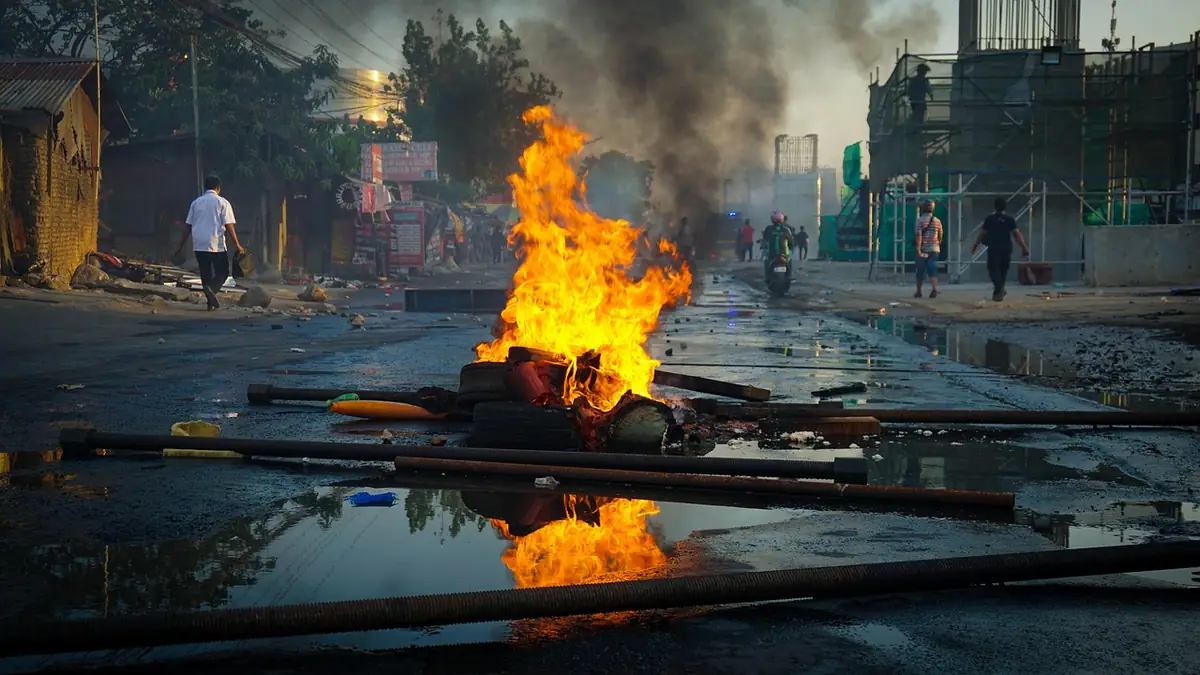
On 24 November 2024, Pakistan's capital Islamabad braced for a major political showdown as the Pakistan Tehreek-e-Insaf (PTI) led by Imran Khan called for a 'Final Call' protest. The party demanded the release of its founder and challenged what it called a stolen mandate in the February 2024 elections.
The day saw road closures, mobile internet suspensions, and a heavy security deployment. This article breaks down what happened, how the government responded, and what followed in the weeks after.
Background and Lead-Up
The 'Final Call' protest was announced in late October 2024 as a culmination of months of political tension. PTI had been holding rallies across the country, but this one was pitched as a decisive push on the capital. The party's demands included the release of Imran Khan, the resignation of the government, and fresh elections.
In the days before 24 November, authorities sealed off major roads into Islamabad with shipping containers, suspended mobile internet in parts of the city, and deployed thousands of police and paramilitary troops. Schools and businesses in the capital closed early, and residents stocked up on essentials. The government warned that any attempt to breach the Red Zone would be met with force.
The authorities also imposed Section 144, banning public gatherings, and arrested hundreds of PTI workers in preemptive raids. PTI, meanwhile, urged supporters to converge on D-Chowk, a central square near government buildings. The stage was set for a high-stakes confrontation.
- PTI demanded Imran Khan's release and fresh elections.
- Government sealed roads, suspended mobile internet, and deployed troops.
- Section 144 imposed; preemptive arrests of PTI workers.
- Protesters aimed for D-Chowk in the Red Zone.
The Day of the Protest
On 24 November, PTI supporters began gathering in Rawalpindi and on the outskirts of Islamabad from early morning. Convoys from Khyber Pakhtunkhwa and Punjab moved towards the capital but were stopped at barricades. Clashes broke out at several points, with police using tear gas and batons, and protesters throwing stones.
By afternoon, a large crowd had reached D-Chowk, where PTI leaders addressed them. Security forces responded with tear gas and rubber bullets. Reports of injuries emerged from both sides, though exact numbers varied. Mobile internet remained suspended in Islamabad and Rawalpindi, disrupting communications and media coverage.
As night fell, the government claimed the situation was under control and that protesters were being pushed back. PTI leaders vowed to continue until their demands were met. The standoff lasted late into the night, with sporadic clashes reported in adjoining areas.
- Convoys from KP and Punjab blocked at entry points.
- Clashes at barricades; tear gas and stone-throwing.
- Crowd reaches D-Chowk; security forces use tear gas.
- Mobile internet suspended in twin cities.
Government Response and Security Measures
The government's response was swift and heavy-handed. Interior Minister Mohsin Naqvi defended the measures, stating that the protest threatened public order and that the Red Zone was off-limits. Authorities cited intelligence reports of planned violence and said they had to protect key installations.
The deployment included Rangers and Frontier Corps, along with police from all provinces. The government also used social media regulations to block live streams and warned of legal action against PTI leaders. Several PTI leaders were arrested in the days surrounding the protest, and the party's offices in some cities were sealed.
Critics argued that the blanket internet shutdown and road closures caused hardship for ordinary citizens, disrupted businesses, and raised concerns about freedom of assembly. The government maintained that the steps were necessary and proportionate.
Immediate Aftermath
In the days after 24 November, PTI claimed that its workers had been subjected to excessive force and that several supporters were missing. The government denied these claims and said that only a few hundred people had been detained, most of whom were released within days.
PTI announced a pause in protests but warned of a larger movement if its demands were not met. The party's leadership faced internal challenges, with some leaders going into hiding. The government, emboldened, pursued cases against PTI workers under anti-terrorism laws.
The protest also had economic repercussions: the stock market dipped briefly, and businesses in Islamabad reported losses. However, the situation normalized within a week as roads reopened and internet services were restored.
- PTI claimed excessive force; government denied.
- Hundreds detained, most released within days.
- PTI warned of future protests.
- Economic impact: market dip, business losses.
Political Fallout
The protest deepened the political polarization in Pakistan. The government accused PTI of attempting to destabilize the country, while PTI accused the government of fascism. Negotiations between the two sides remained stalled.
International observers and human rights groups expressed concern over the use of force and internet shutdowns. The government dismissed these concerns as interference in internal affairs. The episode also strained relations between the federal government and the Khyber Pakhtunkhwa provincial government, led by PTI.
Analysts noted that the protest failed to achieve its immediate objectives but succeeded in keeping PTI's narrative alive. The party's ability to mobilize large crowds despite restrictions demonstrated its enduring support base, though it also exposed the limits of street power against a determined state.
What It Means for the Future
The 24 November protest is likely to be remembered as a turning point in Pakistan's political landscape. It highlighted the growing rift between the establishment and PTI, and the challenges of holding peaceful assemblies in a polarized environment.
For ordinary citizens, the day was a reminder of how quickly political tensions can disrupt daily life. The internet shutdowns and road closures affected businesses, students, and families. As the country moves forward, the lessons from this protest will shape how both the government and opposition approach future confrontations.
PTI has signaled that it will continue its struggle, but the government has shown it will not hesitate to use force. The coming months will reveal whether dialogue can prevail over confrontation.
| Measure | Scale/Details | Duration | Impact |
|---|---|---|---|
| Mobile internet suspension | Islamabad and Rawalpindi | Approx. 24 hours | Disrupted communications, media coverage |
| Road closures (containers) | All major entry points to Islamabad | 3-4 days | Transport disrupted, schools/businesses closed |
| Security personnel deployment | Thousands of police, Rangers, FC | Several days | Heavy presence in capital |
| Arrests (preemptive and during) | Hundreds (govt claims ~500; PTI claims higher) | Most released within days | Legal cases under anti-terrorism laws |
| Section 144 imposition | Islamabad and Rawalpindi | Extended | Ban on public gatherings |
- The 24 November protest was a major confrontation between PTI and the government, marked by heavy security and disruptions.
- Mobile internet suspensions and road closures caused significant hardship for residents and businesses.
- The government's use of force drew criticism from human rights groups, while PTI vowed to continue its struggle.
- The aftermath saw hundreds of arrests and a deepening political divide, with no immediate resolution in sight.
Ayesha Khan is the editor of Sahiwal Updates with over a decade of experience in Pakistani journalism. She focuses on local news and current events, ensuring accurate and timely reporting. Her work emphasizes community impact and factual storytelling.