23 March Pakistan Day: History, Significance, Celebrations
By Ayesha Khan · Published · 5 minutes read
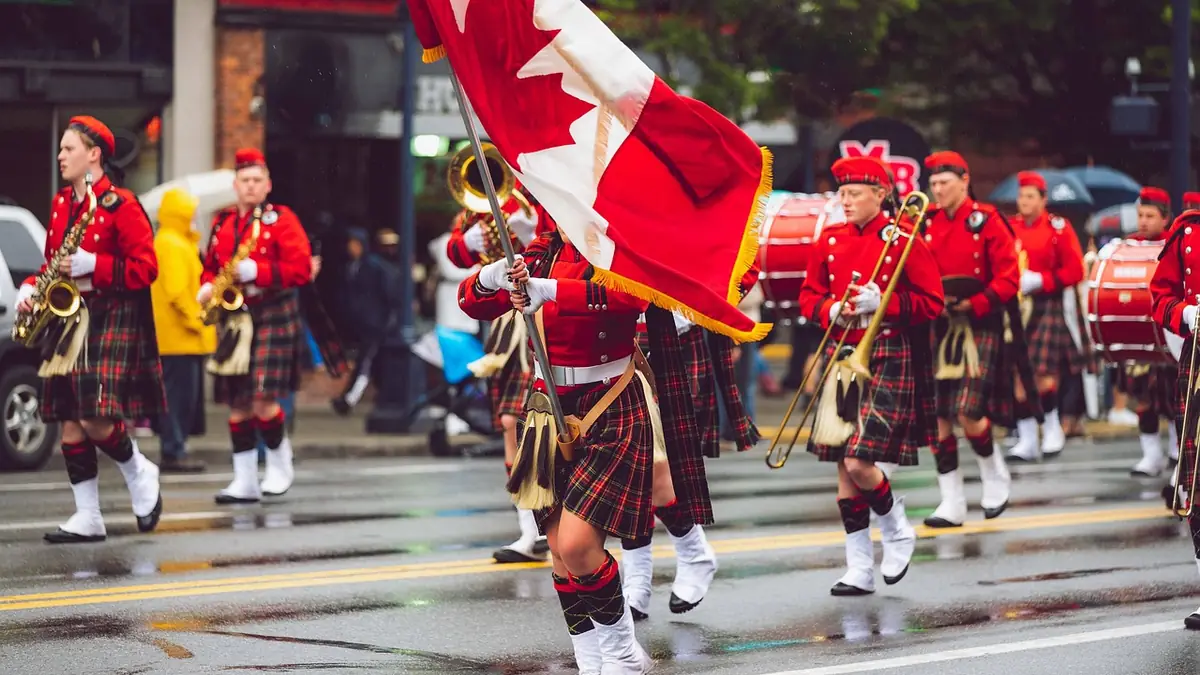
Every year on 23 March, Pakistan marks the anniversary of the Lahore Resolution of 1940, the moment the Muslim League formally adopted the demand for separate homelands for Muslims in British India. It is one of the country's most significant national days, observed with a public holiday, a military parade in the capital, and ceremonies from Karachi to Gilgit.
The day carries both historical weight and modern symbolism. It is when the nation reflects on the idea of Pakistan, honours its armed forces and award recipients, and, in recent years, has often been used to announce new national initiatives. Here is a practical guide to what the day means, how it is observed, and what to expect if you are in the country on 23 March.
Why 23 March Matters: The Lahore Resolution
On 23 March 1940, the All-India Muslim League held its annual session at Minto Park in Lahore. Presided over by Muhammad Ali Jinnah, the session passed a resolution calling for independent states in the regions where Muslims were in a majority. The resolution was moved by A. K. Fazlul Huq of Bengal and seconded by leaders from other provinces, and it became the political foundation for the demand that eventually produced Pakistan.
The text of the resolution deliberately used the plural, speaking of independent states rather than a single state. That wording has been debated by historians ever since. What is not disputed is the effect: it set a clear political goal, consolidated Muslim League support, and shifted the debate from safeguards within a united India to a separate homeland.
Seven years later, on 23 March 1956, Pakistan adopted its first constitution and became the Islamic Republic of Pakistan. That coincidence is why the day is officially called Pakistan Day rather than simply Resolution Day, and why it is tied to both the freedom movement and the country's constitutional identity.
- 1940: Lahore Resolution passed at Minto Park (now Iqbal Park), Lahore
- 1947: Pakistan gains independence in August, five months before the first Pakistan Day
- 1956: First constitution adopted on 23 March, making Pakistan an Islamic Republic
- Public holiday: observed nationwide with offices, schools and banks closed
How Pakistan Day Is Observed
The centrepiece is the joint services parade, usually held in Islamabad on Constitution Avenue and reviewed by the president and prime minister. Army, navy and air force contingents march, followed by flypasts, armoured vehicles and a display of missiles and equipment. Foreign dignitaries are sometimes invited as guests of honour, which in some years has shaped the news cycle around the event.
The morning begins with a 31-gun salute in Islamabad and 21-gun salutes in the provincial capitals. The president confers national awards, including the Nishan-e-Pakistan and Sitara-e-Imtiaz, at a ceremony attended by senior officials. Change-of-guard ceremonies take place at the mausoleums of Jinnah in Karachi and Allama Iqbal in Lahore, where cadets take over ceremonial duties for the day.
Schools and universities hold speech competitions, quizzes and tableaus on the theme of the freedom movement, and television channels run documentaries and special programming. Private housing societies and markets are decorated with flags and lights, though the most visible public enthusiasm is in the run-up to the parade and in the evening fireworks in major cities.
The Parade: What Visitors Should Know
If you plan to watch the Islamabad parade in person, expect significant security arrangements. Roads around the Red Zone and Constitution Avenue are closed from the previous evening, mobile phone services in parts of the city are sometimes suspended for security, and spectators pass through multiple checkpoints with CNIC verification. Most public viewing is on television or via official live streams.
The timing and location of the parade have varied over the years. It was held in Rawalpindi for many years before shifting to Islamabad, and it was cancelled or scaled down in some periods for security or political reasons. There is no guaranteed annual format, so check official announcements in the days before 23 March rather than assuming a full parade will take place.
Rehearsals usually run for one to two weeks before the event, with fighter jet formations visible over the capital. Flights and traffic are affected on rehearsal days as well as on the day itself, so residents should plan travel around the closures.
A Public Holiday: What Stays Open
23 March is a gazetted public holiday under the official holidays calendar. Federal and provincial government offices, banks, courts and most schools and universities are closed. The stock exchange is shut. Hospitals and emergency services operate with reduced staff, and some private businesses remain open, particularly in retail and food.
Travel can be busy: long weekends are common when the holiday falls near a weekend, and domestic tourism picks up on routes to Murree, the northern areas and coastal spots. If you are planning around national holidays, it helps to track the full calendar rather than assuming only the major dates matter, as some holidays depend on moon sightings and government notifications.
Airline, rail and bus bookings tend to fill quickly in the week before the holiday. If you are visiting from abroad, confirm visa timelines well ahead of any national holiday period.
| Date | Event | What It Commemorates | Typical Observance |
|---|---|---|---|
| 23 March 1940 | Lahore Resolution | Muslim League demand for separate homeland | Historical commemorations, speeches |
| 14 August 1947 | Independence | Pakistan becomes an independent state | Flag hoisting, parades, fireworks |
| 23 March 1956 | First Constitution | Pakistan becomes the Islamic Republic | Awards ceremony, national address |
| 23 March (annual) | Pakistan Day | Resolution and constitutional milestone | Parade, gun salutes, public holiday |
| 11 September 1948 | Jinnah's Death | Death of the founder of Pakistan | Quran khwani, visits to mausoleum |
Common Misconceptions About the Day
A frequent confusion is that 23 March is the date of independence. It is not. Pakistan became independent on 14 August 1947, which is celebrated as Independence Day. Pakistan Day commemorates the resolution that set the goal and the 1956 constitution that gave the country its first full legal framework.
Another misconception is that the Lahore Resolution was passed unanimously. It was endorsed by the session, but some delegates from provinces with Muslim-minority populations had reservations, and the wording was contested by groups outside the League. The resolution was a political milestone, not a single moment of national consensus.
Some people assume the day is primarily a military event. While the armed forces play a visible role, the official programme also includes awards for civilians in fields from medicine to literature, and the constitutional anniversary is central to the day's meaning.
Reading the News Around 23 March
Pakistan Day generates a predictable wave of news: parade coverage, award lists, speeches, and announcements framed as national initiatives. Not all of it is equally reliable. Some years see exaggerated claims about military hardware, foreign delegations, or policy announcements that are never implemented, so it is worth checking whether a story is confirmed by official sources or repeated only by aggregator pages.
When a major national event is running, the volume of social media content rises sharply, including old photos and videos recycled as current. A quick verification habit helps: check the date, look for an original source, and see whether mainstream outlets are reporting the same detail. If you are comparing outlets for reliability, a structured checklist is more useful than gut feeling.
It is also sensible to read beyond the ceremonial stories. The day often carries political messaging, and parties use it to position themselves. Understanding the broader party landscape makes that coverage easier to interpret.
- Check whether the story has a named official source
- Look for the date the photo or video was originally posted
- Compare at least two independent outlets
- Be cautious with unverified claims about weapons or foreign visits
- 23 March marks the 1940 Lahore Resolution and the 1956 constitution, not independence.
- The Islamabad parade is the centrepiece but its format and location have varied by year.
- Expect a nationwide public holiday with closed offices, banks and schools.
- Security closures and traffic diversions around the capital are significant on the day.
Ayesha Khan is the editor of Sahiwal Updates with over a decade of experience in Pakistani journalism. She focuses on local news and current events, ensuring accurate and timely reporting. Her work emphasizes community impact and factual storytelling.